The matter did not end there, a few months later, Khasruzzaman Chowdhury, Kazi Rakib Uddin and I were posted for three months to Kohat as probationers on district attachment. We were invested with the power of second-class magistrate there. We had a separate courtroom dedicated for us. Rakib was all alone on one Tuesday (his day for trying a case), he looked grim and frustrated. I asked him what the matter was. He replied that the complainant and the defendant and their lawyers were to be here an hour ago, yet nobody had come. I asked him, 'What did you tell them on the last day you heard the case?' Latif said they were referring to some books and I told them in Urdu to come this week with a bai.
Unfortunately, I had hard time controlling my laughter and said, these people are Pashtun-speaking and they even did not know proper Urdu. 'Evidently, they had been terrified by your order to bring bais in support of their cases. They must be even now looking for the mysterious thing!' When Khasru and I told Rakib that the Urdu for bai or book is 'kitab' (originally Arabic), he seemed confused. He said that the word kitab is also used in Bangla. We told him that though it is used in Urdu, it has found its way in usage by Bengalis, especially the Muslim Bengalis.
President's mess committee:
It was the practice at the civil service academy in Lahore that the first three probationers act as PMC or president's mess committee during the first three quarters. The PMC was equivalent to the vice-presidents of university hall's student unions, minus the political or semi-political functions. While the vice-presidents were elected, the PMCs were selected in order of merit. They were required to represent the trainees during the guest nights when their distinguished guests and their spouses were invited to dinner.
The PMC made the welcome address which was expected to be of a high-standard punch by wit and humour. On the more prosaic side, he had to keep track of the probationer's regular payment to the mess every month for their food. He was assisted by a mess secretary of his own choice. Together, they usually fixed a menu for lunch and dinner. They generally supervised and monitored the work of the mess havildar and his assistants. Needless to say that the PMC was guided and directed by the deputy directors.
During our time, the first PMC was the first boy Shahed Sadullah, his term extended from mid-October 1967 to mid-January 1968. I followed him and served as the PMC from mid-January to mid-April 1968. Shekoor succeeded me and remained PMC till the middle of July. From July to September, we were sent out on what was termed district attachments. During this time, we were trained on the job by respective deputy commissioners. Those from the eastern wing were sent out on attachment to districts in the then West Pakistan.
Those from the western wing were sent to districts in the then East Pakistan. They all gathered in the academy by October for taking the final passing out examination. I remember with painful humour my somewhat challenged term as the PMC. During Shahed's term at the peak of winter, we were taken on tour of the northern region including Peshawar and Rawalpindi-Islamabad. During my term, as winter gave way to spring and summer, we toured the mid-west including Lyallpur and Multan.
During the third term when Shekoor was the PMC, the trainees went on a long bus journey from Lahore to Hyderabad and Karachi. These tours were at once full of opportunities for visiting new places, meeting various people and physically, mentally exacting and exhausting. The journeys were by an uncomfortable academy bus which did not have enough space to relax. Tours by this transport over rough roads were bone-rattling. When we complained to the deputy directors of the distress during the travels they only smiled and tried to comfort us.
Dr Maksud Ali, the only Bengali deputy director who taught us development economics at the academy, told us to bear the ordeal with patience. He said, 'You see, this too is an important part of your training. In future, as key executive officers of the government, you will be required to travel under harsher conditions. The memory of these tours will then feel like luxury trips!' Remembering the experience of my term still makes me laugh in desperation.
Anwarul Karim Chowdhury (Joy) my batchmate and member of the foreign service, (later Bangladesh's permanent representative at the United Nations) was very close to me from university days. He and Abdul Muyeed Chowdhury were junior in class but were dear friends. I thought it good to choose Joy as my mess secretary. I could commit no greater blunder. He was as easy-going and relaxed as me and could not care less for the exacting task of collecting mess dues from the probationers and keeping regular accounts.
It was not until the very final weeks that an enraged Tariq Siddique charged me and Joy like a rhinoceros. He said, 'What do I hear Mizan and Anwar? There the mess havildar came crying to me saying that there has been no collection of mess dues for the last two months.
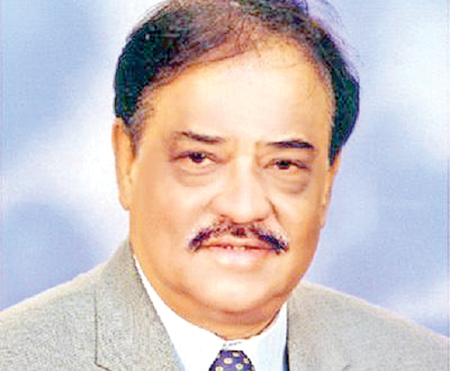
Dr Mizanur Rahman Shelly, founder Chairman of Centre for Development Research (CDRB), and former teachnocrat Cabinet Minister of Bangladesh, Died on August 12, 2019. He contributed his writeups to the Daily Observer which are being published
regularly as "The Symphony
of Our Times"





