



| HEADLINE |

|
Nuclear power plant and environmental health



Mohammad Zahangeer Alam
Nuclear power requires uranium. The nuclear power plant has been produced radioactive waste. The radioactive waste is extremely dangerous because of non-biodegradable in the environment. Most of the plants have been storing of detrimental radioactive wastes in steel-lined concrete basins filled with water. As a result, this radioactive wastes might be remained in the environment for thousands years. For example, Yucca Mountain in Nevada has been projected as a disposal wastes around 77,000 tons. Energy Justice Network estimated that this radioactive waste will remain for 10,000 years. Recently, scientists have conducted research on damaged reactor cooling systems at Fukushima Dai-ichi power plant. They were found subsequent radioactive nuclide in the environmental samples such as, soil, plant, and water.
In 1990, the National Cancer Institute was studied on the report of US Nuclear Regulatory Commission; they were found a lack of data correlation between cancer and proximity to nuclear power plants .This study have been documented a clusters of breast cancer and childhood leukemia near nuclear facilities. Also, the Energy Justice Network have been conducted a research on 268 counties; they were found breast cancer death rates 10 times higher than national average within 50 miles of nuclear power plant. A number of hazardous radionuclides are emits from nuclear power plants, such as tritium, carbon-14 and iodine-129. These radio nuclides are regularly discharged into the environment. Exposure of radionuclides and nuclear radiation can cause carcinogenic, mutagenic and teratogenic effects, such as cancers, leukemia, premature births, low birth-weight, infant mortality, congenital defects, chronic diseases and diabetes.
Although, nuclear plants have been used preventative measures like stationary screens to prevent adult fish. But this system might not been for protection of microscopic plankton and larger aquatic species like sea turtles. Also, these systems are not filter of heavy metals and salts. However, nuclear power has several adverse impacts, but it is provide more energy, effective for developing nations and comparatively safety.
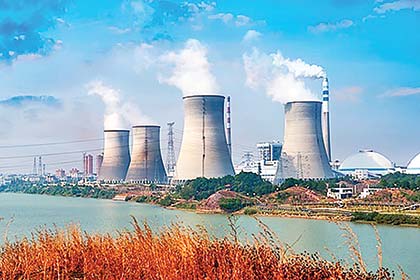 Nuclear power plants are capable to produce more kilowatts than coal, wind or solar. As more plants are built; it is may be expected that construction costs will come down. The price of nuclear-generated electricity is lower than others generated power. Also, the establishment of power plant is created a lot of job opportunity. It is helpful to the development of economic climate.
Millions of people have been living in the poorest countries. They have limited access to reliable sources of electricity. In this circumstance, developing countries might not have been relying on expensive fossil fuel that emits large volumes of carbon dioxide in the environment. Also, global interest is higher an investing in nuclear power; this investment have been providing money into emerging economies and create jobs. As an example, India hopes to produce 25 per cent of its electricity from nuclear power by 2050.
Modern nuclear power plants are committed to protect of health risk. It is safer than coal-burning plants. Four feet concrete wall reactors are built for safety in the United States nuclear power plant. Three Mile Island (1979) and Chernobyl (1986) were not built a concrete containment structures. As a result, major accidents were happened in the world due to lack of technical sounds.
It is concluded that efficient nuclear power is definitely important for sustainable environment. Environment, health and ecosystem are significantly important for human beings. Although Nuclear power might be useful for more energy, it must have safety regulation for protection of environment and human health.
Bangladesh already started to generate nuclear power in Rooppur. This power plant will generate about 2400 megawatts electricity. Nuclear Energy is significantly essential in Bangladesh to achieve vision 2020 and vision 2041. The generation of this electricity through nuclear power plant will play significant role for the economic growth in Bangladesh. Honourable Prime Minister Sheikh Hasina clearly stated that electricity will be generated through nuclear power for future demand in Bangladesh with the full consideration of environmental degradation. Alternatively, green energy sources such as, solar energy, biogas and wind mill energy are also significantly considered in context of sustainable environment.
The writer is an Associate Professor, Department of Environmental Science, Faculty of Agriculture
Loading...
Loading...
Also read






Editor : Iqbal Sobhan Chowdhury
Published by the Editor on behalf of the Observer Ltd. from Globe Printers, 24/A, New Eskaton Road, Ramna, Dhaka.
Editorial, News and Commercial Offices : Aziz Bhaban (2nd floor), 93, Motijheel C/A, Dhaka-1000.
Phone: PABX- 41053001-06; Advertisement: 41053012; 01793317829, 01550707291, E-mail: [email protected], [email protected] Online: email: [email protected] 41053014; 01550707297 Advertisement: 01550707296
Published by the Editor on behalf of the Observer Ltd. from Globe Printers, 24/A, New Eskaton Road, Ramna, Dhaka.
Editorial, News and Commercial Offices : Aziz Bhaban (2nd floor), 93, Motijheel C/A, Dhaka-1000.
Phone: PABX- 41053001-06; Advertisement: 41053012; 01793317829, 01550707291, E-mail: [email protected], [email protected] Online: email: [email protected] 41053014; 01550707297 Advertisement: 01550707296


