



| HEADLINE |

|
Organic farming to fight Covid-19


 The word "organic" was first used in relation to farming by Lord Northborurne in 1940. However, organic farming is an essential issue at this moment due to the pandemic of coronavirus. Organic farming is a universal production technique which improves crop ecosystem, biological diversity and soil "microbial activities".
Organic farming was developed in 1924 by philosopher Rudolph Steiner based on the ideas of "biodynamic"farming. Outside of the developed countries of Western Europe and North America, a great development of organic farming occurred during the 1980s in parts of Oceania, Central and South America, Asia, and Africa. Currently, Australia is the largest organic producer (10 million hectares) and Argentina is the second largest (3 million hectares). The ethical principles of organic farming are confirmed in four standards, such as health, ecology, justice and ethics.
Organic farming incorporates three attitudes in terms of naturalness, such as chemical free, crop ecology and the ethical approach in which the morality of life is concern. There are many benefits in organic farming, such as healthy food, biodiversity protection and soil quality.
Organic farming provides healthy food which boosts the immune system of humans. Organic agricultural crops are cultivated on farms without using synthetic substances. Crops, fish, livestock and different vegetables are cultivated in the organic farm as part of an integrated process. These foods have fewer toxins when grown in organic matter. Further, organic food contains high amounts nutrients such as amino acids, vitamins, minerals, and fibre. All of these components are necessary for human beings to protect themselves from COVID-19 disease and live a healthy life.
Consumers are worried about the usage of chemical fertilizers, pesticides, food additives and veterinary medicines, which they notice as potential health hazards. As a consequence, consumers think that these are a health risk and may be unwilling to buy conventionally grown agriculture products. Specifically, chemical residue is a major threat to human health in the conventional farming.
Residual levels are significantly higher in the conventional food than organic products. From this perspective, scientist conducted a research on atopic (allergies) disorder in children, and found that the atopic disorder was lower in the children who consumed organic food. Therefore, organic food is healthier in terms of high nutrient contents that strengths the immune system of human beings. At this moment chemical free food is essential to face the pandemic of coronavirus in the world.
Organic farming creates an ecological balance for biodiversity protection on the Earth's surface. It is a possible solution to protect the impact of continuous agricultural crop cultivation. This farming system also increases the species diversity in an ecosystem by providing a favourable environment for them. As a consequence, a healthy organic agriculture ecosystem includes species such as earthworms, mycorrhizae and other beneficial microorganisms, as well as beneficial insects and predators like bees, birds, lady bird beetles, carabid beetles, dragon flies, and damsel flies.
Some of these insects are predators which are significantly important for controlling harmful insects in the crop field. These types of species are becoming extinct from conventional fields due to high use of chemicals. Organic farming provides a wide variety of food for these types of species. As a result, species interaction becomes a dominant feature in the organic farm environment. Thus, it can be predicted that organic farming promotes biodiversity protection in an ecosystem.
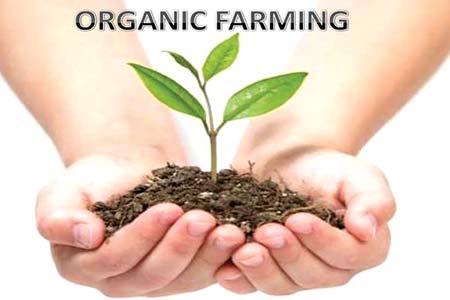
Organic farming enriches the fertility of soil which increases crop yield in the long run. Fertile soil increases crop productivity due to the high nutrient presence in the soils. Organic fertilizer contains more elements than chemical fertilizer. All essential elements such as Carbon, Nitrogen, Phosphorous, Potassium, Zinc, and Sulphur are present in organic fertilizer. These types of nutrients improve the soil structure. Also, organic farming increases the beneficial microbes' leading to improve the soil quality. Beneficial microorganism arbuscular mycorrhizal fungi are greater in the organic farming than conventional.
This arbuscular mycorrhizal fungi are forms a symbiotic relationship with leguminous crops. This leads to transporting phosphorous nutrients from soil to plants roots. Soil Organic Carbon (SOC), enzymatic activities, dehydrogenase and glucose amidase and water stable soil aggregates are significantly increased in organic farming area compared with inorganic farmed cropland. As a result, organic farming improves the soil quality. Hence, organic farming enhances the productivity of crops due to the high fertility of the soil.
Although, the benefits of organic farming are already well known, it is in fact still expensive and results in a lower yield. For example, organic farming yields 13 to 34% lower than conventional farming, which leads to an increased price. As a result, not all people are able to buy organic food. Organic farming provides lower yield than inorganic farming due to high prevalence of pests and disease in the crop fields. In this circumstance, organic food production cost is higher than inorganic farming due to pest and disease management. These costs are transported on to the customer; organic food becomes more costly to buy than usually produced food.
As a consequence, most of the people are not able to pay more for organic food. Once the price is clear, people are not fascinated to buy of organic when they can buy more food for a low-priced. Nevertheless, organic food is expensive, but it reduces health treatment costs by preventing some diseases such as Covid-19 diseases, which is important to many consumers in the world. Food safety is important to be free from covid-19 disease, including cancer. For instance, higher levels of vitamin C, phenolic compounds, omega-3 fatty acids and conjugated linoleic acid in milk found from organically farmed animals.
This type of organic foods contains higher antioxidative and antimutagenic activities as well as sound inhibition of lung cancer cell multiplying. Due to these and other studies, many scientists believe that organic food is the best for human health and safety. For people who want to stay healthy during corona pandemic as long as possible organic food is often a priority because it is nutritious and has much lower levels of toxic substances. Therefore, organic food is a significant benefit for human beings because it reduces additional expenditure for hospitalization due to the covid-19.
However, food safety and food prices both are important for human beings, organic food reduces health risk. Soil is the important biotic resource for production of crops in a different scale. Healthy soil provides more nutrients to plants than organic farming. People and other species living on the same planet rely on each other for survival. It is clear that organic farming has been shown to provide healthy food for human beings as well as increasing antibodies necessary for disease resistance.
Increased disease resistance leads to reduced medical treatment costs for Covid-19 disease. Further, organic farming maintains ecological balance which allows for a healthy ecosystem, thus building environmentally friendly biological diversity. It also increases soil fertility that protects the soil quality and controls erosion. As a result, soil productivity has been increased due to organic farming and it might be able to fulfil the food demand for an increasing world population during the pandemic of COVID-19 disease.
Dr Mohammad Zahangeer Alam, Associate Professor, Department of Environmental Science, Bangabandhu Sheikh Mujibur Rahman Agricultural University (BSMRAU)
Loading...
Loading...
Also read






Editor : Iqbal Sobhan Chowdhury
Published by the Editor on behalf of the Observer Ltd. from Globe Printers, 24/A, New Eskaton Road, Ramna, Dhaka.
Editorial, News and Commercial Offices : Aziz Bhaban (2nd floor), 93, Motijheel C/A, Dhaka-1000.
Phone: PABX- 41053001-06; Advertisement: 41053012; 01793317829, 01550707291, E-mail: [email protected], [email protected] Online: email: [email protected] 41053014; 01550707297 Advertisement: 01550707296
Published by the Editor on behalf of the Observer Ltd. from Globe Printers, 24/A, New Eskaton Road, Ramna, Dhaka.
Editorial, News and Commercial Offices : Aziz Bhaban (2nd floor), 93, Motijheel C/A, Dhaka-1000.
Phone: PABX- 41053001-06; Advertisement: 41053012; 01793317829, 01550707291, E-mail: [email protected], [email protected] Online: email: [email protected] 41053014; 01550707297 Advertisement: 01550707296


