



| HEADLINE |

|
Exclusive interview of Polish ambassador accredited to Bangladesh
Published : Wednesday, 1 May, 2019 at 12:00 AM
shahriar feroze


Marking the 47th anniversary of BD-Poland relations on January 12, His Excellency, Ambassador Adam Burakowski gives an exclusive interview from Delhi to The Daily Observer's Shahriar Feroze.
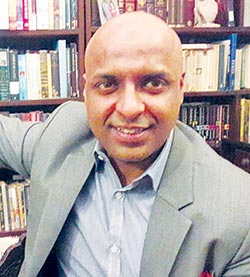
shahriar feroze
His Excellency, Adam Burakowski: The quick recognition of the independent Bangladesh was a positive beginning of the permanently friendly relations between our countries. Poland and Bangladesh have been cooperating for a long time and we see good perspective for the future.
The Daily Observer: We know that Bangladesh and Poland have mutually agreed to build ties in blue economy , following news reports of April 2017 , has there been any significant progress in that regard?
H E Adam Burakowski: The issue of the sustainable development of marine environment and its resources, including fish stocks, mineral resources and offshore energy facilities is one of interest to the global community, including Poland.
At present, various stakeholders in Poland are developing a Maritime Spatial Plan of Polish Sea Areas. The plan seeks to collate data on various aspects of the marine economy, as well as maritime security, the development of port and shipping infrastructure and lead to the sustainable development of coastal communities.
3. In early 2017 the press reported of strengthening bilateral relationship and expanding economic and trade cooperation between the two countries. How much does the trade volume between the two countries stand today, worth in $?
H E Adam Burakowski: Bilateral trade between Poland and Bangladesh stood at USD 1.91 billion in 2018. Bangladesh presently has a large trade surplus with Poland - Polish exports to Bangladesh accounted for USD 73.2 million, whereas Bangladesh's export to Poland were registered at USD 1.84 billion.
The majority of Bangladesh's exports to Poland were comprised of ready-made garments and textiles. Conversely, the main Polish exports to Bangladesh in 2018 were turbines, iron and steel scrap, paper, animal feed and cranes and lifting equipment.
I am pleased to note that bilateral trade between our two countries have been growing steadily in recent years.
4. We come to know from your November 2018 visit to Dhaka that Poland and Bangladesh could explore the avenues of scholarly exchange of information on genocide. Has there been any development so far?
The Daily Observer: We know that Bangladesh and Poland have mutually agreed to build ties in blue economy , following news reports of April 2017 , has there been any significant progress in that regard?
H E Adam Burakowski: The issue of the sustainable development of marine environment and its resources, including fish stocks, mineral resources and offshore energy facilities is one of interest to the global community, including Poland.
At present, various stakeholders in Poland are developing a Maritime Spatial Plan of Polish Sea Areas. The plan seeks to collate data on various aspects of the marine economy, as well as maritime security, the development of port and shipping infrastructure and lead to the sustainable development of coastal communities.
3. In early 2017 the press reported of strengthening bilateral relationship and expanding economic and trade cooperation between the two countries. How much does the trade volume between the two countries stand today, worth in $?
H E Adam Burakowski: Bilateral trade between Poland and Bangladesh stood at USD 1.91 billion in 2018. Bangladesh presently has a large trade surplus with Poland - Polish exports to Bangladesh accounted for USD 73.2 million, whereas Bangladesh's export to Poland were registered at USD 1.84 billion.
The majority of Bangladesh's exports to Poland were comprised of ready-made garments and textiles. Conversely, the main Polish exports to Bangladesh in 2018 were turbines, iron and steel scrap, paper, animal feed and cranes and lifting equipment.
I am pleased to note that bilateral trade between our two countries have been growing steadily in recent years.
4. We come to know from your November 2018 visit to Dhaka that Poland and Bangladesh could explore the avenues of scholarly exchange of information on genocide. Has there been any development so far?
H E Adam Burakowski: In January 2019 at the Jagiellonian University in Krak�w, the oldest one in Poland, Prof. Wojciech Nowak, the Rector of the Jagiellonian University, Prof. Adam Jelonek and Prof. Agnieszka Kuczkiewicz-Fra?, together with H.E. Muhammad Mahfuzur Rahman, Ambasador of Bangladesh to Poland, signed the memorandum to open the Bangabandhu Centre for Bangladesh Studies. This is the first scientific unit in Poland devoted exclusively to Bangladesh studies. Many scholars and students are interested in these topics. We have also a growing number of Bangladeshi students in Poland. Your country is becoming more and more popular in my country.
5. it's often reported, Poland, especially after joining the European Union in 2004, became a country attracting scores of international tourists. Does the polish tourism industry plans to extend the tourism appeal by offering attractive tour packages to Bangladeshi tourists to Poland?
H E Adam Burakowski: Poland is very attractive tourist destination for people from all over the world, including Bangladeshis. Our heritage is fascinating and nature is also well preserved and easy to explore. Our touristic infrastructure is on world-level standards and more and more people visit Poland every year.
6. The visiting Polish first deputy minister of energy stated last February that your government was keen to make an investment of US$ 1 billion in Bangladesh's mining sector. It is indeed encouraging; can we expect to see the materialisation of your investing in the mining sector in Bangladesh from this year?
 H E Adam Burakowski: The visit of the First Deputy Minister of Energy of the Republic of Poland to Bangladesh in February 2019 and his subsequent meetings with the Minister of Foreign Affairs, Mr. A.K. Abdul Momen, and the Minister of Energy & Mineral Resources, Mr. Nasrul Hamid, is a strong indicator of the willingness of Poland to increase economic cooperation with Bangladesh.
As a country which is a world-leader in underground coal mining, we are open to the possibility of technology transfers and exchange of know-how to Bangladesh in increasing its domestic coal production. The technology, equipment and know-how that Polish companies possess can contribute greatly to increasing coal production by Petrobangla and its subsidiary companies.
7. We have around 3, 000 plus Bangladeshi migrants, including skilled labourers in Poland, is there a plan to take more skilled migrants in the near future? If your answer is yes, then what are those potential sectors?
H E Adam Burakowski: Poland is very attractive tourist destination for people from all over the world, including Bangladeshis. Our heritage is fascinating and nature is also well preserved and easy to explore. Our touristic infrastructure is on world-level standards and more and more people visit Poland every year.
6. The visiting Polish first deputy minister of energy stated last February that your government was keen to make an investment of US$ 1 billion in Bangladesh's mining sector. It is indeed encouraging; can we expect to see the materialisation of your investing in the mining sector in Bangladesh from this year?
H E Adam Burakowski: The visit of the First Deputy Minister of Energy of the Republic of Poland to Bangladesh in February 2019 and his subsequent meetings with the Minister of Foreign Affairs, Mr. A.K. Abdul Momen, and the Minister of Energy & Mineral Resources, Mr. Nasrul Hamid, is a strong indicator of the willingness of Poland to increase economic cooperation with Bangladesh.As a country which is a world-leader in underground coal mining, we are open to the possibility of technology transfers and exchange of know-how to Bangladesh in increasing its domestic coal production. The technology, equipment and know-how that Polish companies possess can contribute greatly to increasing coal production by Petrobangla and its subsidiary companies.
7. We have around 3, 000 plus Bangladeshi migrants, including skilled labourers in Poland, is there a plan to take more skilled migrants in the near future? If your answer is yes, then what are those potential sectors?
H E Adam Burakowski: Skilled workers from Bangladesh are highly appreciated by Polish companies, where they are known to be enterprising and highly motivated.
At the same time, while the number of skilled Bangladeshi workers in Poland has been rising, we would like to observe a corresponding growth in Bangladeshi investments into Poland. Poland has been recently ranked in the top-five most attractive investment destinations in the European Union.
We believe that such investments by Bangladeshi companies will only serve to further strengthen the bilateral economic cooperation between our two countries.
8. Bangladeshi readymade garments, pharmaceuticals, jute and jute made goods, ceramics and leather and leather goods have been identified as products with huge potential in the Polish market. However, increase in trade volumes, especially export from Bangladesh is not picking up. What can the two countries do to give it a boost?
H E Adam Burakowski: Bilateral trade between Poland and Bangladesh has grown significantly in recent years. Polish exports to Bangladesh rose from USD 28.32 million in 2014 to USD 73.2 million in 2018. Similarly, Bangladeshi exports to Poland grew from USD 839.64 million in 2014 to USD 1.84 billion in 2018.
I believe that there exists a strong potential to increase bilateral trade between our countries, particularly through reducing the trade imbalance, by increasing Polish exports to Bangladesh. Polish products exported to third countries are known for their high-quality and for being cost-competitive in the international market.
One way to achieve this would be by ensuring higher visibility of Polish companies and their products and services in Bangladesh. Appropriate exhibitions and trade shows can be selected in both countries, which would allow for greater visibility of companies in the corresponding markets, under the aegis of the relevant chambers of commerce and industry.
9. Poland's economic growth has been steady and exponential for the last 26 years; it's an impressive performance as a European nation. How can Bangladesh draw valuable lessons from this economic success story?
H E Adam Burakowski: Poland has witnessed remarkable economic growth in recent years. In 2018, Poland's economy grew at 5.2% year - to - year, making it one of the fastest growing economies in the European Union. It is also one of the very few economies in the European Union which did not suffer a slowdown following the global financial crisis of 2008.
Poland possesses great demographic capital, in the form of a talented, technically-qualified and highly-motivated workforce. The cost of labour and manufacturing is also much lower in Poland than in other fellow E.U. member states. Additionally, the majority of young talent entering the workforce in Poland know one or more foreign languages - an added advantage for domestic and foreign companies.
Another driver for economic growth in Poland has been the government's business-friendly support policies, which have contributed to the increasing inflows of foreign investments. Due to the introduction of various government measures, Poland has risen significantly in the World Bank's Ease of Doing Business Rankings. One such move has been to extend the tax incentives and grants received by companies operating in the 14 SEZs in Poland to the entire territory of the country.
We believe that such investments by Bangladeshi companies will only serve to further strengthen the bilateral economic cooperation between our two countries.
8. Bangladeshi readymade garments, pharmaceuticals, jute and jute made goods, ceramics and leather and leather goods have been identified as products with huge potential in the Polish market. However, increase in trade volumes, especially export from Bangladesh is not picking up. What can the two countries do to give it a boost?
H E Adam Burakowski: Bilateral trade between Poland and Bangladesh has grown significantly in recent years. Polish exports to Bangladesh rose from USD 28.32 million in 2014 to USD 73.2 million in 2018. Similarly, Bangladeshi exports to Poland grew from USD 839.64 million in 2014 to USD 1.84 billion in 2018.
I believe that there exists a strong potential to increase bilateral trade between our countries, particularly through reducing the trade imbalance, by increasing Polish exports to Bangladesh. Polish products exported to third countries are known for their high-quality and for being cost-competitive in the international market.
One way to achieve this would be by ensuring higher visibility of Polish companies and their products and services in Bangladesh. Appropriate exhibitions and trade shows can be selected in both countries, which would allow for greater visibility of companies in the corresponding markets, under the aegis of the relevant chambers of commerce and industry.
9. Poland's economic growth has been steady and exponential for the last 26 years; it's an impressive performance as a European nation. How can Bangladesh draw valuable lessons from this economic success story?
H E Adam Burakowski: Poland has witnessed remarkable economic growth in recent years. In 2018, Poland's economy grew at 5.2% year - to - year, making it one of the fastest growing economies in the European Union. It is also one of the very few economies in the European Union which did not suffer a slowdown following the global financial crisis of 2008.
Poland possesses great demographic capital, in the form of a talented, technically-qualified and highly-motivated workforce. The cost of labour and manufacturing is also much lower in Poland than in other fellow E.U. member states. Additionally, the majority of young talent entering the workforce in Poland know one or more foreign languages - an added advantage for domestic and foreign companies.
Another driver for economic growth in Poland has been the government's business-friendly support policies, which have contributed to the increasing inflows of foreign investments. Due to the introduction of various government measures, Poland has risen significantly in the World Bank's Ease of Doing Business Rankings. One such move has been to extend the tax incentives and grants received by companies operating in the 14 SEZs in Poland to the entire territory of the country.
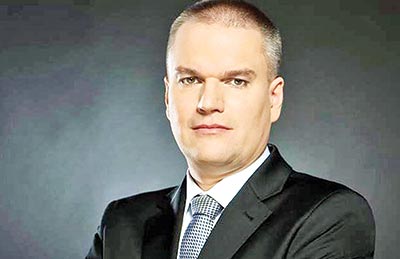
Polish ambassador accredited to Bangladesh, Adam Burakowski
10. What's the Polish government's stance on the ongoing Rohingya crisis and Bangladesh's role in sheltering more than a million plus refugees in the past couple of years?
H E Adam Burakowski: Poland is a country that suffered a lot during world wars and after, during Soviet occupation and under imposed communist regime. We feel compassion towards the victims. I personally visited the refugee camp in Cox's Bazar. I was impressed by the effort made by Bangladesh and United Nations to help the people in need.
11. Currently we have too few cultural exchange programmes between the two countries. Do you have any plan to increase the number of programmes?
H E Adam Burakowski: We are planning to work on progress with the mutual cultural exchange. Opening of the Bangabandhu Centre for Bangladesh Studies at the Jagiellonian University in Krak�w, which I mentioned before, is a step into this direction. Polish Institute based in Delhi is also active here, in Bangladesh, promoting various Polish artists.
12. the people of Bangladesh, as of now, is largely uninformed of Poland on several aspects and vice versa. Media exchange programmes conducted by both countries can play a significant role, do you agree? What should the two countries do to increase more exchange of information?
H E Adam Burakowski: In my opinion it is the time to think about opening the Bangladeshi counterpart of the Bangabandhu Centre for Bangladesh Studies. We can also promote music and film cooperation.
Thank you for the interview!
The interviewer is editor - in - charge, editorial section,
The Daily Observer
H E Adam Burakowski: In my opinion it is the time to think about opening the Bangladeshi counterpart of the Bangabandhu Centre for Bangladesh Studies. We can also promote music and film cooperation.
Thank you for the interview!
The interviewer is editor - in - charge, editorial section,
The Daily Observer
Loading...
Loading...
Also read


Editor : Iqbal Sobhan Chowdhury
Published by the Editor on behalf of the Observer Ltd. from Globe Printers, 24/A, New Eskaton Road, Ramna, Dhaka.
Editorial, News and Commercial Offices : Aziz Bhaban (2nd floor), 93, Motijheel C/A, Dhaka-1000.
Phone: PABX- 41053001-06; Advertisement: 41053012; 01793317829, 01550707291, E-mail: [email protected], [email protected] Online: email: [email protected] 41053014; 01550707297 Advertisement: 01550707296
Published by the Editor on behalf of the Observer Ltd. from Globe Printers, 24/A, New Eskaton Road, Ramna, Dhaka.
Editorial, News and Commercial Offices : Aziz Bhaban (2nd floor), 93, Motijheel C/A, Dhaka-1000.
Phone: PABX- 41053001-06; Advertisement: 41053012; 01793317829, 01550707291, E-mail: [email protected], [email protected] Online: email: [email protected] 41053014; 01550707297 Advertisement: 01550707296


