



| HEADLINE |

|
Alternative childcare in Bangladesh
Published : Saturday, 30 March, 2019 at 12:00 AM
Md Enamul Haque


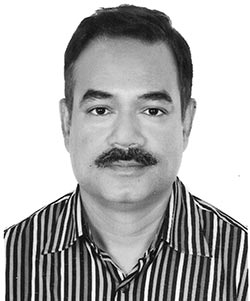
Md Enamul Haque
Bangladesh is home to over 160 million people. More than 64 million children make up around 40 per cent of the population. According to UNICEF, 130 million children around the world are at risk of losing parental care, and an estimated 24 million children either live in some form of alternative care, or completely without the care of elders.
A study conducted by SOS Children's Villages International in 2016, shows that, at least one in ten children worldwide has already lost or is at risk of losing the loving care of their parent. The UN Guidelines for Alternative Care of Children in 2009 provided the first international framework. This addresses not only governments but also international organizations and child rights agencies, civil society, professional and voluntary organizations, and the private sector as well. It also covers those who are directly or indirectly involved with organizing, providing or monitoring out of family/home care for children.
It is generally accepted that the family is the 'fundamental group of society and the natural environment for the growth, well-being and protection of children'. Efforts to enable children to remain with their family are emphasized extensively unless such separation is necessary and in the best interest of the child. Children may have lost one or even both parents due to disease or a natural disaster.
Others may have been separated from their parents because of internal displacements, or were abandoned due to poverty. Unfortunately, many children that do still live with their families can also experience a similar lack of parental care: their parents may be too ill to take care of them, or neglect them because of drug addiction or out of sheer despair. These children are left to fend for themselves, both physically and emotionally and the number of such children is growing very rapidly in Bangladesh and the South East Asian region.
In Bangladesh, there are several alternative childcare options available. Childhood is a period where parents are essential--first for the child's survival and existence and later for their full physical and mental development. Then a simple question arises about what are the basic needs of children? Physically, the child needs food and clothes, a safe place to sleep. Mentally, the child needs love and affection especially from adults regarded as their own, a feeling of being wanted and accepted in the family, community and to have some sense of security and sustainability. At the same time, the child needs opportunities to be accepted and valued in the society. Some of the available alternative child care options in Bangladesh includes: lodging masters (the practice is now mostly non-existent), foster care, kinship care, adoption (in South Asia, legal provision for adoption exists only in India, Sri Lanka, and Nepal), residential care, institutional care and orphanage.
The government has taken several noteworthy and effective initiatives in regard to alternative child care in Bangladesh. The Department of Social Services, under the Ministry of Social Welfare, has a major programme named Child Welfare and Child Development in order to provide access to food, shelter, basic education, health services and other basic opportunities for hapless children. The government is operating a total of 91 child care centres across the country. Out of these centres, 85 are named as 'Shishu Paribar' (children family) where vulnerable and orphan children aged between seven and eighteen are kept. The rest six child care centres are called 'Choto Moni Nibash' (residence of infants) where infants up to the age of seven are catered for.
Any form of care that institutionalises children and violates their rights is never a suitable care option for children. Children must not grow up in an impersonal environment without individual care and isolated from society. We therefore actively promote the UN Guidelines for Alternative Care as a key reference point for care reform and de-institutionalization. Many Non-Governmental Organisations and International Non-Governmental Organisations are involved with alternative care for children in the country - SOS Children's Village International in Bangladesh is one of them, amongst many others. Most of these NGOs and INGOs are all working towards the betterment of children through alternative care. However, the values, vision, mission of all these organisations are unique in their own ways.
For example, SOS Children's Village International in Bangladesh focuses on the 'care solution', which mainly comprises of three focus areas, alternative care, family strengthening and advocacy and partnership for quality care. SOS Children's Village International in Bangladesh is ensuring care for vulnerable children who lost parental care through different programmes in divisional towns and considered as a model of alternative childcare organization in Bangladesh. A considerable segment of these organisations' activities is greatly aligned with United Nation's 17 SDGs (Sustainable Development Goals) and children form an integral part of these 17 Goals both directly and indirectly.
For a more effective and feasible alternative care solution in Bangladesh, the government and NGOs need to work rigorously through forming different collaborations. It is vital that the people in the rural areas are aware of this issue, hence extensive awareness raising campaigns, workshops etc. needs to be organized in the grass root level. The children who are living with relatives or in different organisations, needs to be ensured a loving and caring home, that does not only ensure their physical wellbeing, but also mental wellbeing. Regular audit needs to be carried out in different organisations to ensure proper alternative care. There are many other strategies that can be implemented for a better alternative childcare solutions in Bangladesh, however the ones mentioned above can bring remarkable positivity to the existing situation.
Dr Md Enamul Haque, Deputy National Director, SOS Children's Villages International in Bangladesh. He can be reached at: [email protected]
Loading...
Loading...
Also read


Editor : Iqbal Sobhan Chowdhury
Published by the Editor on behalf of the Observer Ltd. from Globe Printers, 24/A, New Eskaton Road, Ramna, Dhaka.
Editorial, News and Commercial Offices : Aziz Bhaban (2nd floor), 93, Motijheel C/A, Dhaka-1000.
Phone: PABX- 41053001-06; Advertisement: 41053012; 01793317829, 01550707291, E-mail: [email protected], [email protected] Online: email: [email protected] 41053014; 01550707297 Advertisement: 01550707296
Published by the Editor on behalf of the Observer Ltd. from Globe Printers, 24/A, New Eskaton Road, Ramna, Dhaka.
Editorial, News and Commercial Offices : Aziz Bhaban (2nd floor), 93, Motijheel C/A, Dhaka-1000.
Phone: PABX- 41053001-06; Advertisement: 41053012; 01793317829, 01550707291, E-mail: [email protected], [email protected] Online: email: [email protected] 41053014; 01550707297 Advertisement: 01550707296


