



| HEADLINE |

|
Humayun Azad
An avant-garde writer, voicing the unspoken
Tribute
Published : Thursday, 26 April, 2018 at 12:00 AM
Ashley Shoptorshi Samaddar


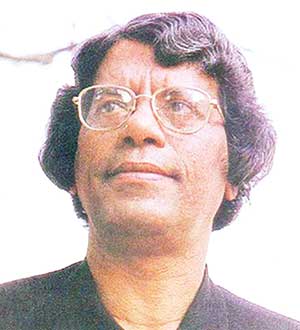 "Chastity flags masculinity"
 - Humayun Azad
Writing has been a very strong way to protest against any injustice; but often, penned words face more censorship and criticism than is expected. On April 28, 1947, another such rebel descended on earth, the world knows him by the name, Humayun Azad.
Breathing in bordering tensions, this multi talented mutineer has contributed unconditionally to enrich the field of linguistics and is most notably known for his diverse writing in the arena of Bangla literature.
Belonging to a village named Rarhikhal in Bikrampur, Munshiganj, Azad passed his higher secondary examination from Dhaka College in 1964. He chose to continue his further academics with the University of Dhaka, from where he completed his Bachelors and later Masters from Bangla Language and Literature in 1967 and 1968 respectively.
After the Liberation War, in 1976, Azad submitted his thesis on Pro-nominalisation in Bangla for a doctorate degree from the University of Edinburgh. Along with being a linguist, he was an amazing author and poet.
Alongside his academic career on its peak, first as a teacher at the Chittagong College in 1969, followed by his appointment as a lecturer at the University of Chittagong in 1970 and later at Jahangirnagar University in 1972, Azad had already begun to explore the world of Bangla literature with his poem 'Aloukik Ishtimar' in 1973.
Soon afterwards, around the 1980s, his pen became the voice of his inner soul as he started to write newspaper columns, criticising socio-political issues. By the 1990s, his voice grew louder as his words started openly critiquing the religious extremists, which made this agnostic free thinker a rival to the Islamic leaders of this Muslim majority country.
Azad also forced the society to think about the position of women with his literary work Naari in 1992, which is considered to be the first comprehensive feminist book by a man in Bangladesh, shedding light on how patriarchal domination and religious dogmas are the biggest enemy of this subordinate race. This earned Azad fame as a writer and also established his name in literature.
With his pen pacing faster than his heartbeat, he deliberately dared to point a finger towards the existing practice of Islam with his article, 'Pak Sar Zamin Sad Bad' (Pakistan's national anthem: 'Blessed be the Sacred Land') in the Eid supplement of The Daily Ittefaq in 2003.
With his words unwilling to rest, Azad soon had to pay the price with his blood in 2004. He was attacked by two assailants, repeatedly stabbed by knives while he was attending the Bangla Academy Book Fair on February 27.
Just a week before Azad's stabbing, renowned religious leader Delwar Hossain Sayeedi demanded Azad's political satire 'Pak Sar Zamin Sad Bad' to be banned. He also claimed that the writer be charged with blasphemy.
Azad, in this regard responded via his email to Mukto-mona saying, "The Ittefaq published a story by me, named Pak Sar Zamin Saad Baad in its Eid issue on December 3. It deals with the condition of Bangladesh for the last two years. Now the (religious) fundamentalists are bringing out regular processions against me, demanding exemplary punishment. The two attached files with this letter will help you understand."
This attempted assassination left the rebel with numerous scars on his jaws, neck, and hands. He was rushed immediately to the Dhaka Medical and later to the Combined Military Hospital (CMH). He finally healed in Thailand after receiving treatment from the Bumrungrad International Hospital.
His rebelling pen was finally silenced on August 12, 2014, at Munich, Germany, a few months after the attack. After his death, he was finally an accolade to the Ekushey Padak in 2012.
"Each story enlightens the world of books in its own way," said Azad and even today his stories, faithful to his pen, keep on shedding light on many social issues, enlightening us.
Notable works:
Poems:
Aloukik Ishtimar (1973)
Jolo Chitabagh (1980)
Shob Kichu Noshtoder Odhikare Jabe (1985)
Jotoi Gobhire Jai Modhu Jotoi Uporay Jai Neel (1987)
Ami Bachay Chilam Onnoder Shomoy (1990)
Humayun Azader Shreshtho Kobita (1993)
Adhunik Bangla Kobita (1994)
Kafone Mora Osrubindu (1998)
Kabya Shonggroho (1998)
Peronor Kichhu Nei (2004)
Fiction:
Sab Kichu Bhenge Pare (1995)
Ekti Khuner Shwapno (2004)
Pak Sar Zamin Sad Bad (2004)
Literary Criticism:
Naree (1992)
Ditio Lingo (2001) translation of The Second Sex by Simone de Beauvoir
Amra Ki Ai Bangladesh Cheyechilam (2003)
Dhormanubhutir Upokotha (2004)
Loading...
Loading...



Editor : Iqbal Sobhan Chowdhury
Published by the Editor on behalf of the Observer Ltd. from Globe Printers, 24/A, New Eskaton Road, Ramna, Dhaka.
Editorial, News and Commercial Offices : Aziz Bhaban (2nd floor), 93, Motijheel C/A, Dhaka-1000.
Phone: PABX- 41053001-06; Advertisement: 41053012; 01793317829, 01550707291, E-mail: [email protected], [email protected] Online: email: [email protected] 41053014; 01550707297 Advertisement: 01550707296
Published by the Editor on behalf of the Observer Ltd. from Globe Printers, 24/A, New Eskaton Road, Ramna, Dhaka.
Editorial, News and Commercial Offices : Aziz Bhaban (2nd floor), 93, Motijheel C/A, Dhaka-1000.
Phone: PABX- 41053001-06; Advertisement: 41053012; 01793317829, 01550707291, E-mail: [email protected], [email protected] Online: email: [email protected] 41053014; 01550707297 Advertisement: 01550707296


